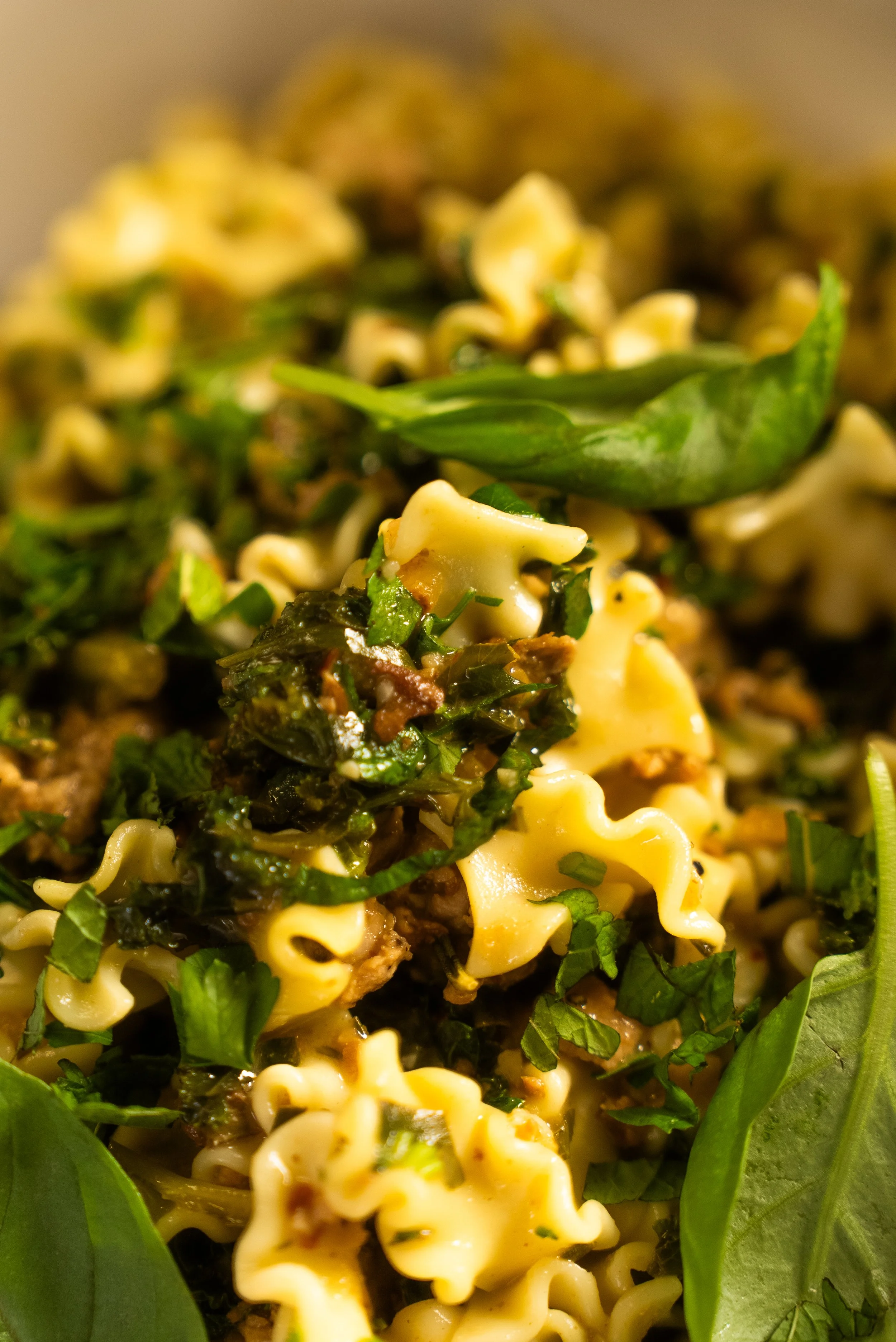
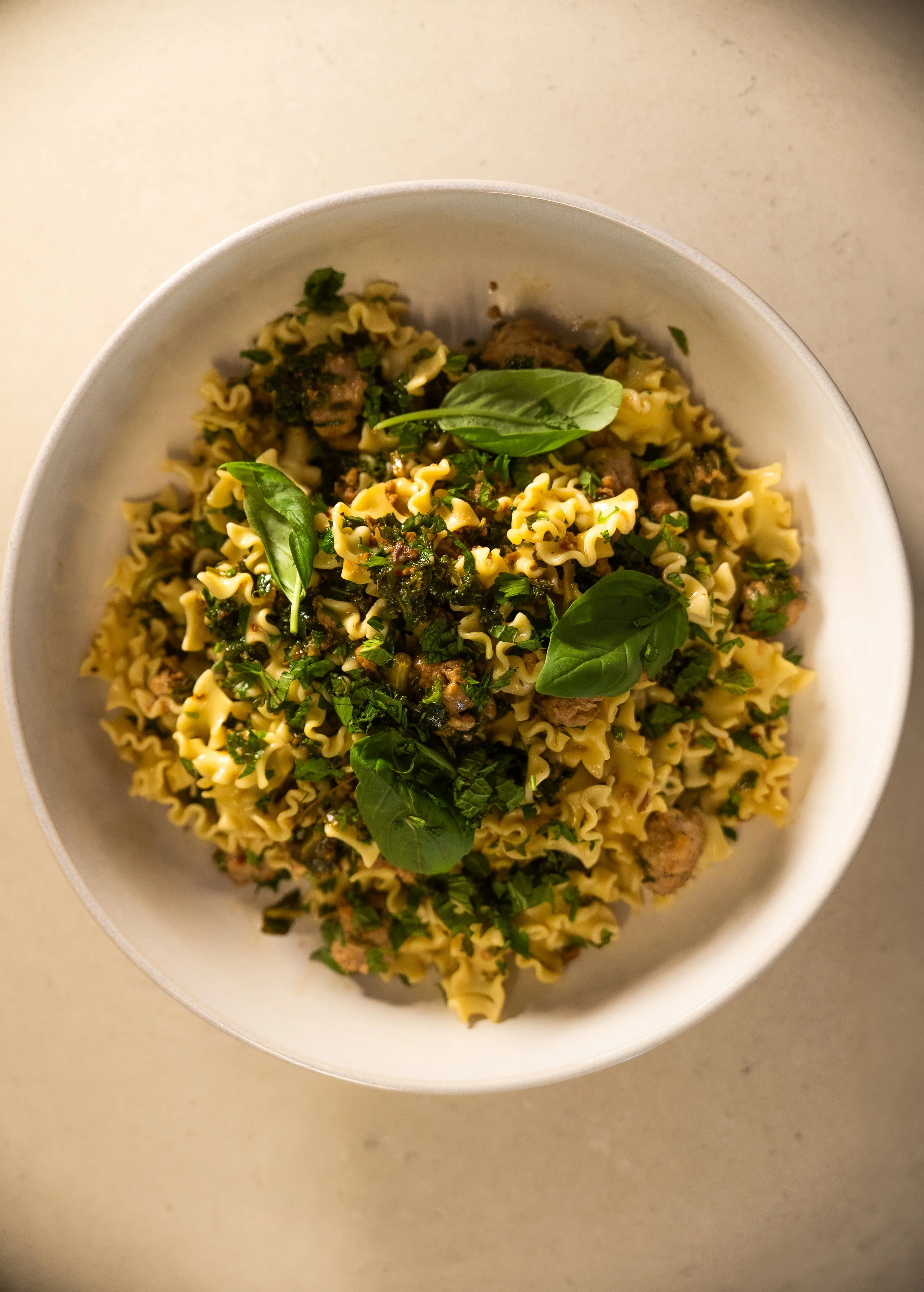
Sausage, Basil and Lemon Pasta
400 grams orecchiette or casereca (or pasta shape of choice)
500 grams Italian fennel sausages, casings removed
2 The Larder Preserved Lemon quarters, rind only, finely sliced
1 teaspoons fennel seeds
0.5 teaspoons dried chilli flakes
4 garlic cloves, thinly sliced
125 milliliters dry white wine
60 grams cold unsalted butter, cubed
60 grams freshly grated parmesan, plus extra to serve
fresh flat-leaf parsley, roughly chopped
fresh basil leaves, torn, plus extra to finish
2 tablespoons extra virgin olive oil
180 ml reserved pasta water (starchy)
1 teaspoons freshly cracked black pepper
1 tablespoons fine sea salt, for pasta water
STEPS
1
Prep the preserved lemon: Scrape away any flesh or pith from 2 The Larder Preserved Lemon quarters, rind only, finely sliced, you want only the rind. Slice it into fine strips or a rough mince. Set aside. This is the flavour backbone of the dish; don't skip the prep.
2
Boil the pasta: Bring a large pot of water to a rolling boil and season generously with 1tablespoons fine sea salt, for pasta water. Cook the orecchiette or casereca (or pasta shape of choice) until just shy of al dente, about 1–2 minutes less than the packet says. Before draining, scoop out 180 ml reserved pasta water (starchy) and set aside. Drain and keep warm.
3
Brown the sausage: Heat 2 tablespoons extra virgin olive oil in a wide, heavy-based pan over medium-high heat. Add 500 grams Italian fennel sausages, casings removed, breaking it up with a wooden spoon into rough, chunky crumbles, you want varied texture, not fine mince. Cook undisturbed for 2–6 minutes to get good colour, then stir and continue cooking until deeply golden and cooked through, about 5–6 minutes total. Remove sausage from the pan and set aside, leaving the fat behind.
4
Build the base: Reduce heat to medium. Add 1 teaspoons fennel seeds and 0.5 teaspoons dried chilli flakes to the pan and toast in the residual sausage fat for 3 minutes until fragrant. Add 4 garlic cloves, thinly sliced and cook, stirring, for 1–2 minutes until softened and just starting to turn golden. Add the preserved lemon rind and stir through, let it sizzle and caramelise slightly for another minute.
5
Deglaze and reduce: Pour in the dry white wine and scrape up any golden bits from the base of the pan. Let the wine reduce by half, about 2–2mins. Return the sausage to the pan and stir to combine.
6
Bring it together: Add the drained pasta directly to the pan along with the reserved pasta water (start with about ¾ of it). Toss well over medium heat. Add 60 grams cold unsalted butter, cubed a few cubes at a time, tossing constantly to emulsify into the sauce, this is what gives you that glossy, clingy finish. Add 60 grams freshly grated parmesan, plus extra to serve and continue tossing, adding more pasta water as needed to reach a silky, sauce-coating consistency. Season with freshly cracked black pepper and taste, the preserved lemon brings salt, so go easy before adding any extra.
7
Finish with herbs and serve: Remove from heat. Fold through fresh flat-leaf parsley, fresh basil leaves, plus extra to finish. Divide among four warm bowls. Finish each with a generous tangle of fresh basil, an extra shower of parmesan, a drizzle of your best olive oil, and a crack of black pepper. Serve immediately.
NOTES
The Larder Preserved Lemon tip: Use the rind only - the flesh is intensely salty and can overwhelm the dish. Two quarters is the sweet spot for brightness without bitterness, but if your lemons have been in the jar a long time (deeply mellowed), you can push to three.
Pasta shape: Orecchiette cups the sausage beautifully; casereca twists trap every bit of the sauce. Both are ideal. Rigatoni or penne work well too.
The butter-pull: Cold butter is key - add it off or just at the edge of the heat and keep tossing. If the pan is too hot, the sauce will split instead of emulsify.
No wine on hand? Substitute with a splash of good chicken stock plus a squeeze of fresh lemon juice to keep the acidity.
To make it a little more substantial: A handful of wilted cavolo nero or baby spinach stirred through at the pasta-toss stage is a natural fit.